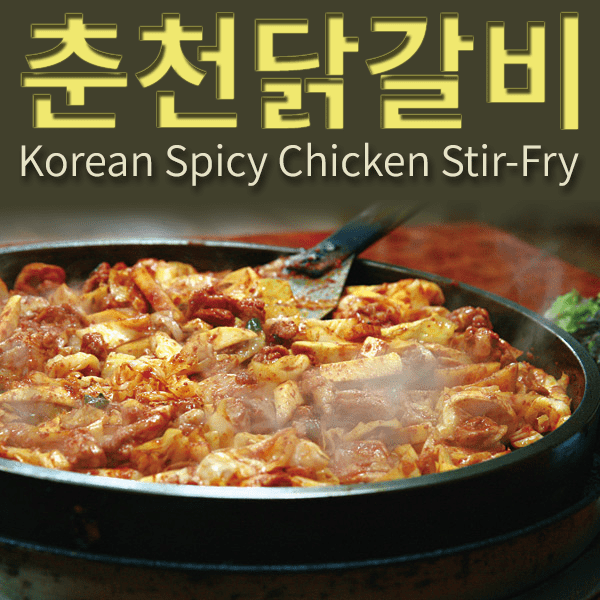
Hey there, spice lovers and interactive cooking enthusiasts! 🐔🔥 Ready to discover Korea’s most addictive dish that’s cooked right at your table while you watch the magic happen? Prepare to fall head-over-heels for Chuncheon Dakgalbi (춘천닭갈비) – the spicy chicken stir-fry from Korea’s charming mountain city that’s basically a party in a pan, and everyone’s invited to join the fun!
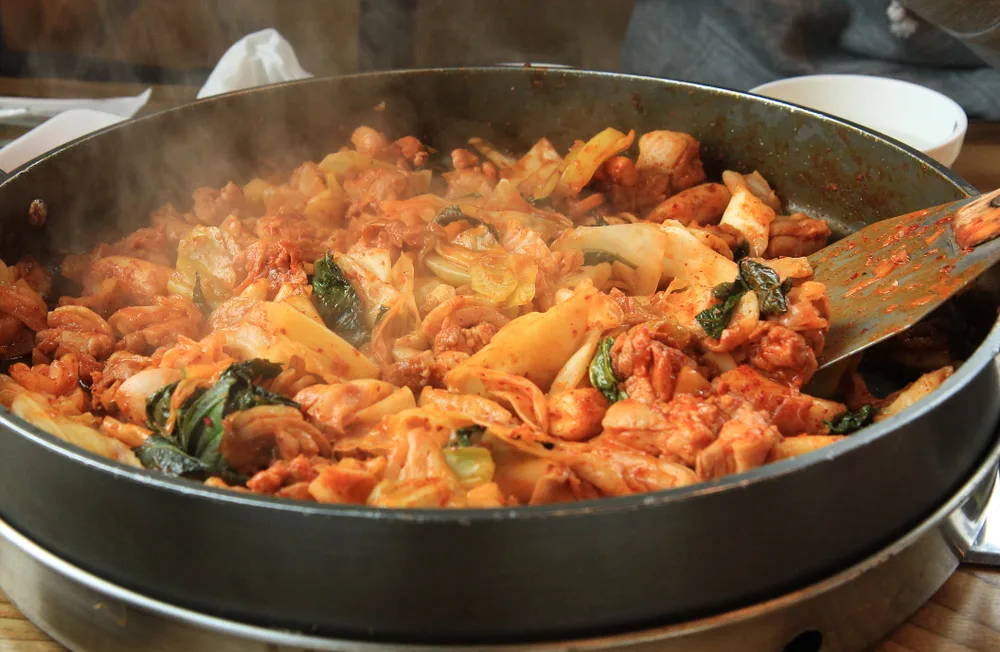
Picture this: tender chunks of marinated chicken sizzling away with colorful vegetables in a massive iron pan, all bathed in a gorgeous red sauce that’s sweet, spicy, and absolutely irresistible. The whole thing cooks right in front of you, filling the air with the most incredible aromas, and then everyone digs in together with chopsticks and spoons. It’s not just dinner – it’s dinner AND entertainment! 🎭✨
Why Chuncheon Dakgalbi Will Become Your New Group Dining Obsession
Real talk time! My first dakgalbi experience was supposed to be a quick lunch in Chuncheon, but it turned into a three-hour social event that I’ll never forget. I walked into this bustling restaurant where every table had these huge iron pans with people gathered around them, laughing and cooking together, and I thought, “What kind of magical dining experience have I stumbled into?”
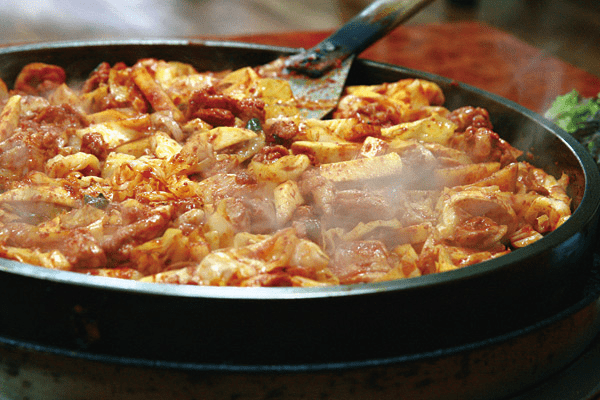
When our pan arrived – loaded with marinated chicken, cabbage, sweet potatoes, rice cakes, and this incredible red sauce – the server fired up the burner right at our table and started stirring everything together. Watching it cook, smelling those amazing aromas, and then diving in with chopsticks while it was still sizzling… PURE DINING BLISS.
The genius of dakgalbi isn’t just in the flavors (though they’re incredible) – it’s in how it brings people together. You can’t eat this dish passively. Everyone’s involved, everyone’s sharing from the same pan, and conversation flows as naturally as the cooking process. It’s social dining at its absolute finest! 🥢👥
Everything You Need for This Interactive Feast
The Chicken Stars
- 2 lbs boneless chicken thighs or breast, cut into bite-sized pieces
- 2 tablespoons soy sauce
- 1 tablespoon rice wine or mirin
- 1 teaspoon sesame oil
- 1/2 teaspoon black pepper
The Magical Dakgalbi Sauce
- 4 tablespoons gochujang (Korean chili paste)
- 2 tablespoons soy sauce
- 2 tablespoons brown sugar or honey
- 1 tablespoon rice vinegar
- 1 tablespoon sesame oil
- 4 cloves garlic, minced
- 1-inch piece ginger, grated
- 1 tablespoon gochugaru (Korean red pepper flakes)
The Colorful Supporting Cast
- 1/2 head napa cabbage, cut into large pieces
- 2 medium sweet potatoes, sliced into rounds
- 1 large onion, sliced
- 1 bunch green onions, cut into 2-inch pieces
- 8 oz rice cakes (tteok), soaked if frozen
- 4 oz Korean glass noodles (optional but amazing)
- 1 cup mung bean sprouts
- 2 carrots, julienned
Shopping Adventure Guide 🛒
Korean markets are your dakgalbi paradise! Look for pre-cut chicken pieces labeled for dakgalbi, or ask the butcher to cut thighs into bite-sized chunks. H-Mart, 99 Ranch, or any Korean grocery will have everything you need in one place!
Can’t find rice cakes? Many regular supermarkets carry them now in the international aisle. Missing glass noodles? The dish is still amazing without them. No Korean sweet potatoes? Regular sweet potatoes work perfectly!
Pro tip: Some Korean markets sell pre-made dakgalbi sauce – totally legitimate and super convenient!
Let’s Create Some Table-Side Magic!
Step 1: The Chicken Prep Mastery
Perfect chicken makes all the difference:
- Cut chicken into uniform bite-sized pieces (about 1-inch chunks)
- Marinate with soy sauce, rice wine, sesame oil, and black pepper
- Let it sit for at least 30 minutes (longer is better!)
- This pre-marination ensures tender, flavorful chicken
Step 2: The Sauce Alchemy
This sauce is where the magic lives:
- Whisk together gochujang, soy sauce, and brown sugar until smooth
- Add rice vinegar, sesame oil, garlic, ginger, and gochugaru
- Mix until you have a gorgeous, thick red sauce
- Taste and adjust – it should be sweet, spicy, and deeply savory
Step 3: The Vegetable Prep Party
Getting everything ready for the big show:
- Cut all vegetables into similar sizes for even cooking
- Arrange everything on platters for easy access during cooking
- Soak rice cakes in warm water if they’re frozen
- Having everything prepped makes the cooking process smooth and fun
Step 4: The Grand Cooking Performance
Here’s where it gets interactive and exciting:
- Heat a large pan or electric griddle at the table (or use a large skillet on the stove)
- Add marinated chicken and cook until almost done (5-6 minutes)
- Add harder vegetables first: sweet potatoes, onions, carrots
- Add the dakgalbi sauce and mix everything together
- Add cabbage, bean sprouts, and rice cakes
- Everyone can take turns stirring and mixing – it’s part of the fun!
Step 5: The Final Flourish
- Add green onions and glass noodles in the last few minutes
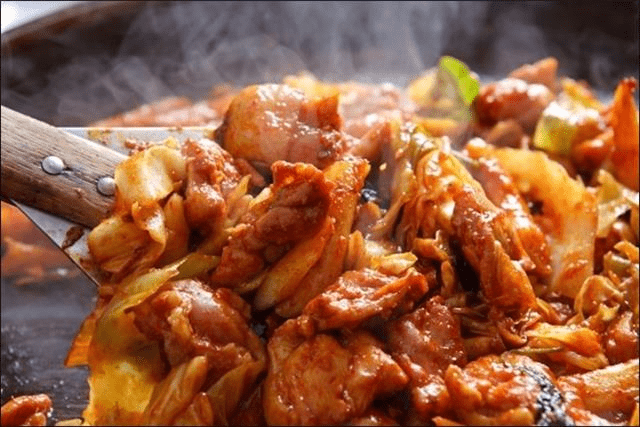
- Everything should be coated in that gorgeous red sauce
- Cook until vegetables are tender-crisp and chicken is fully cooked
- The whole process takes about 15-20 minutes of interactive cooking
Step 6: The Communal Feast
- Serve directly from the pan with chopsticks and spoons
- Provide small bowls of rice for everyone
- Eat while it’s still sizzling hot from the pan!
The Art of Dakgalbi Dining (It’s a Social Skill!)
Here’s how to maximize your dakgalbi experience:
The Sharing Philosophy: Everyone eats from the same pan – use your chopsticks to grab what you want and eat over rice!
The Cooking Participation: Take turns stirring and mixing – it’s part of the bonding experience!
The Perfect Bite: Get a little bit of everything in each bite – chicken, vegetables, sauce, and rice.
The Pace Management: Don’t rush – dakgalbi is meant to be eaten slowly while socializing!
The Rice Game: Some people add rice directly to the pan at the end to make bokkeumbap (fried rice) – ultimate comfort move!
Why Your Body Will Thank You for This Interactive Feast
Dakgalbi isn’t just fun – it’s surprisingly nutritious:
- Lean protein from chicken thighs or breast
- Vitamin powerhouse from all those colorful vegetables
- Probiotic boost from fermented gochujang
- Fiber rich from sweet potatoes and vegetables
- Antioxidant loaded from gochugaru and garlic
- Social benefits – sharing meals reduces stress and builds relationships!
Creative Dakgalbi Adventures
Ready to make it your own? Try these variations:
- Cheese Dakgalbi: Add mozzarella cheese on top in the last few minutes – incredibly popular!
- Seafood Addition: Throw in some shrimp or squid for surf-and-turf action
- Extra Veggie Power: Add mushrooms, zucchini, or bell peppers
- Mild Version: Reduce gochujang for heat-sensitive friends
- Protein Switch: Try with pork or beef for different flavors
The Chuncheon Cultural Connection
Chuncheon Dakgalbi originated in the 1960s in Chuncheon city, about an hour from Seoul, as an affordable meal for college students and young people. The city embraced this dish so completely that there’s now an entire “Dakgalbi Street” lined with restaurants serving nothing but variations of this beloved dish.
What makes dakgalbi special in Korean culture is its democratic nature – everyone participates in the cooking and eating process equally. It’s often chosen for group celebrations, team dinners, and dates because it naturally creates interaction and shared experiences.
The dish also represents Korean innovation in taking simple ingredients and creating something that’s both delicious and entertaining. It’s proof that the best dining experiences engage all your senses and bring people together.
Your Dakgalbi Social Dining Challenge!
Ready to revolutionize your dinner party game? I challenge you to host a dakgalbi night and transform your dining room into an interactive Korean restaurant! Get a portable burner, gather your friends, and create an unforgettable communal cooking experience!
Group challenge: Make dakgalbi the centerpiece of your next celebration – birthday, promotion, or just because it’s Friday! Document the cooking process, capture everyone’s reactions to their first bite, and most importantly – film the moment when someone inevitably says, “We have to do this again!”
Here’s the beautiful truth about dakgalbi – once you host a dakgalbi dinner, you’ll never want to go back to boring, passive dining experiences. You’ll have discovered the secret to creating memorable meals that people talk about for months afterward. Your friends will start requesting “dakgalbi nights” instead of regular dinner invitations!
Have you ever tried interactive table-cooking experiences like this? What’s your favorite way to make dining more social and engaging? Share your communal cooking adventures in the comments – let’s celebrate all the ways food brings us together!
P.S. – If you host a dakgalbi night, please tag me in your cooking-together videos! I’m absolutely living for those moments when everyone realizes they’re having way more fun than they expected. Your inner Korean dining host is about to emerge! 🐔🔥👥