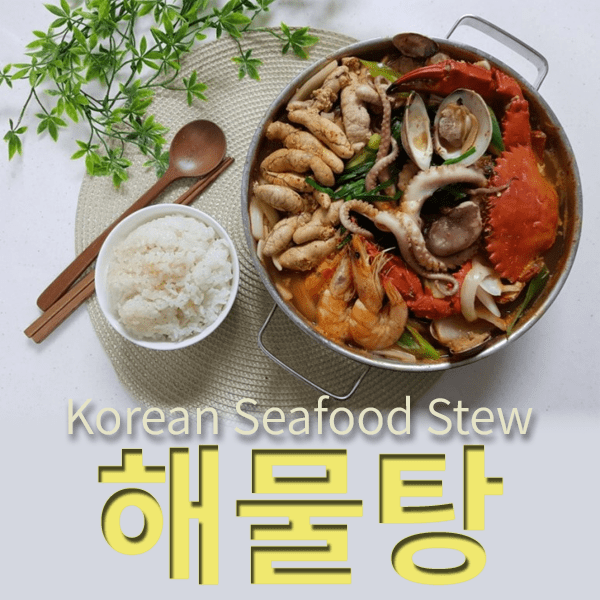
Haemultang is a spicy Korean stew made with a mixture of seafood, vegetables, gochugaru, and gochujang. This inherited version uses crab, shrimp, squid, clams, mussels, and white fish. The main challenge is not the seasoning; it is preparing the seafood safely and adding each item in an order that avoids overcooking the quick-cooking pieces.
Bottom line: Prepare every ingredient before heating the pot. Start with crab and firm fish, add shellfish and shrimp after the broth returns to a simmer, and add squid near the end. Use temperature and visual doneness checks rather than one fixed time because seafood size, starting temperature, and pot load vary.
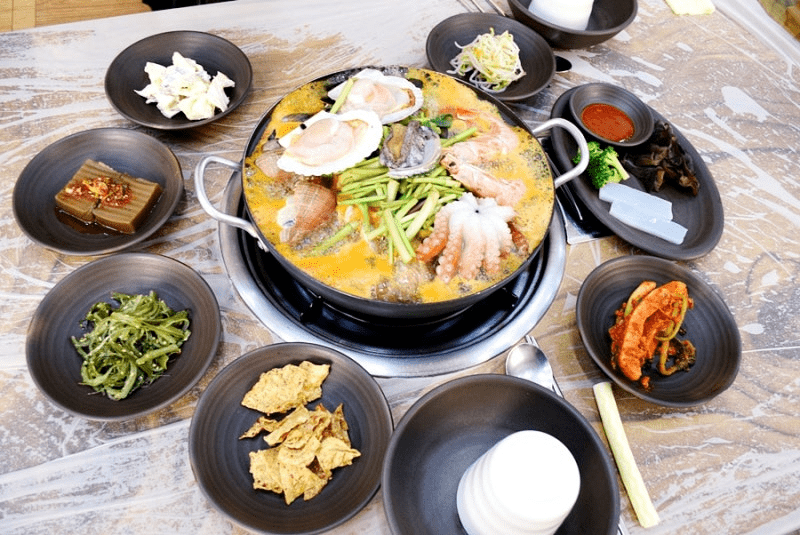
Haemultang Ingredients
Seafood
- 2 whole blue crabs, cleaned and quartered
- 1 lb large shrimp, shells on
- 1 lb squid, cleaned and cut into rings
- 1 lb littleneck clams, scrubbed clean
- 1/2 lb mussels, scrubbed and debearded
- 8 oz firm white fish, such as cod or halibut, cut into chunks
Broth and Seasoning
- 8 cups seafood or chicken stock
- 3 tablespoons gochugaru (Korean red pepper flakes)
- 2 tablespoons gochujang (Korean chile paste)
- 2 tablespoons soy sauce
- 1 tablespoon fish sauce
- 2 tablespoons rice wine or mirin
- 1 tablespoon sesame oil
Vegetables and Aromatics
- 1 onion, sliced
- 6 cloves garlic, minced
- 2-inch piece ginger, julienned
- 4 green onions, cut into 2-inch pieces
- 1 Korean radish, julienned, or regular radish
- 1 bunch Korean crown daisy, or spinach
- 2 jalapeño peppers, sliced, optional
Haemultang Cooking Method
- Prepare the seafood safely. Keep raw seafood and its tools separate from ready-to-eat foods. Scrub the clams and mussels and discard any with cracked shells. Live clams and mussels that remain open after tapping should also be discarded. Clean and portion the crab, shrimp, squid, and fish.
- Build the seasoning base. Heat the sesame oil over moderate heat. Add the onion, garlic, and ginger and stir until aromatic. Stir in the gochugaru and gochujang briefly, then add the soy sauce, fish sauce, and rice wine before the chile mixture scorches.
- Start the broth. Add the stock and radish and bring the pot to a boil, then reduce it to a steady simmer. Taste only after the seafood has cooked because the shellfish and fish sauce will change the salt level.
- Add the sturdy seafood first. Add the crab and firm fish pieces. When the broth returns to a simmer, add the clams and mussels, followed by the shrimp. Avoid crowding the pot so the broth can return to temperature.
- Finish with quick-cooking ingredients. Add the squid near the end, then add the green onion, crown daisy or spinach, and optional jalapeño. Keep the stew at a simmer just until the seafood is cooked through.
- Check doneness before serving. Most seafood should reach 145°F (63°C). Fish should be opaque and flake easily, and shrimp and crab flesh should be pearly or white and opaque. Discard clams or mussels that did not open during cooking. Adjust the final seasoning and serve with rice.
Ingredient Choices and Tradeoffs
- Crab: Blue crab is listed in the inherited recipe, but another edible crab can be used. Larger pieces take longer to heat through.
- Shell-on shrimp: The shells add flavor to the broth, while peeled shrimp make serving easier.
- Squid: Add it late because prolonged cooking can make the texture firm and chewy.
- Crown daisy: This herb has a distinctive flavor. Spinach is milder but wilts in a similar way.
- Heat level: Reduce either the gochugaru or jalapeño first. Changing one ingredient at a time makes the result easier to judge.
Common Problems
- The broth is too salty: Wait until the shellfish opens before adding more soy sauce or fish sauce. Dilute with unsalted stock if necessary.
- The chile base tastes bitter: The gochugaru or gochujang may have scorched. Keep the heat moderate and add liquid promptly.
- The seafood cooks unevenly: Cut thick fish into similar pieces and allow the broth to return to a simmer between additions.
- The squid is chewy: Add it after the other seafood is nearly cooked and remove the pot from heat once the doneness checks are met.
Food Safety and Verification Limit
The FDA seafood guidance provides the 145°F (63°C) target, visual doneness cues, and shellfish discard rules used above. The FDA safe food handling guidance recommends separating raw seafood from ready-to-eat food and using safe thawing methods.
This page preserves an archived ingredient list and broad cooking order. No owner cooking log was supplied to confirm the exact yield, burner setting, or cooking time for this mixture, so it is not labeled kitchen-tested. Check the seafood in the actual pot and follow local food-safety guidance.
What to Cook Next
For another seafood stew, compare the order of ingredients in sundubu jjigae. For a fermented soybean broth, see doenjang jjigae. The Korean cooking starter plan explains how to organize a small pantry and a first week of Korean meals.