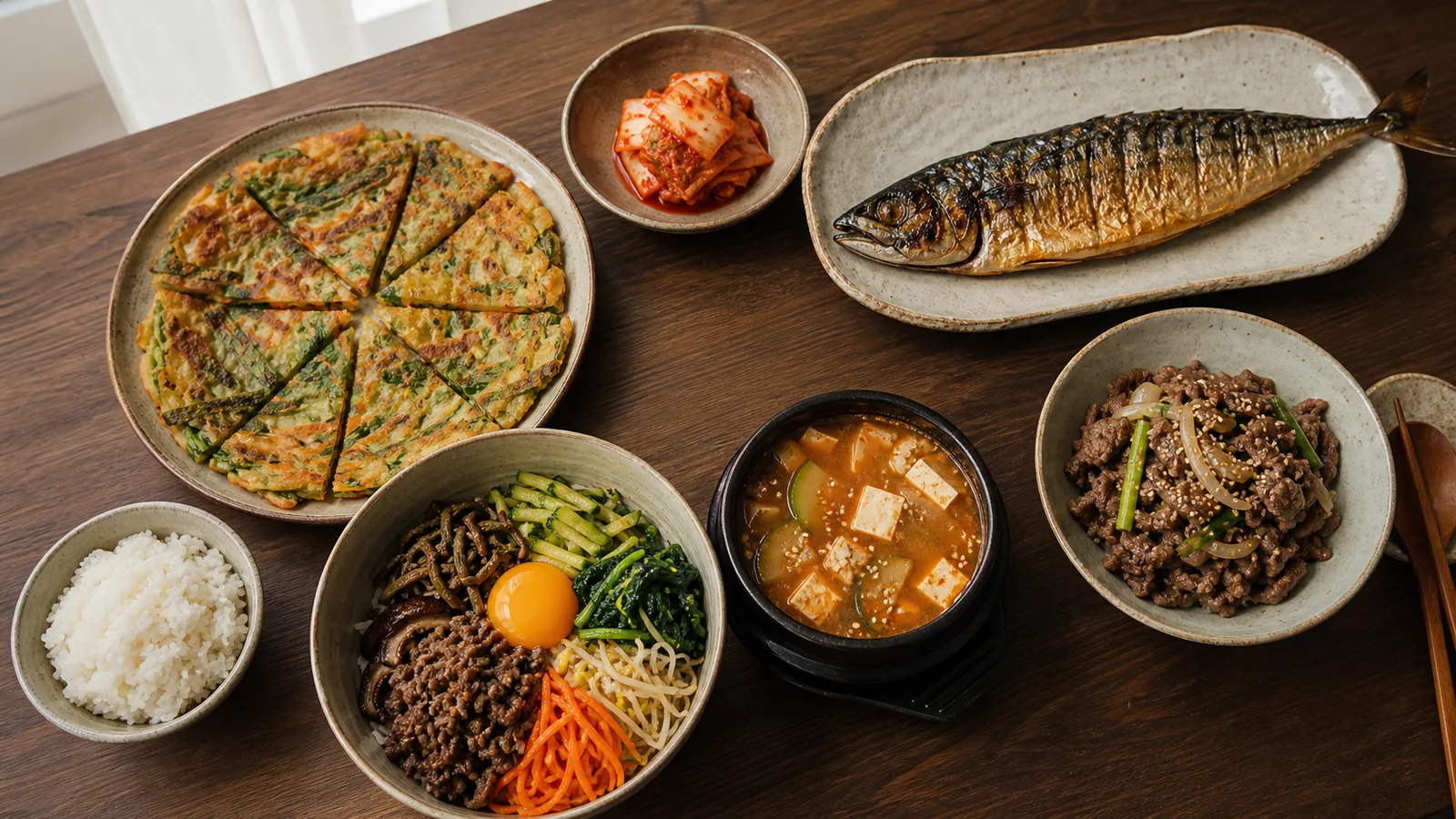
Korean cooking becomes much easier when you stop trying to learn an entire cuisine at once. Begin with a small pantry and five dishes that teach different techniques: mixing a sauce, seasoning vegetables, simmering a broth, browning marinated meat, and managing heat.
This plan is designed for a first week of cooking. You do not need every Korean ingredient, a crowded table of side dishes, or special cookware. Read each recipe before shopping, check labels for allergens, and adjust seasoning at the end because soy sauce, kimchi, doenjang, and gochujang vary by brand.
The Small Korean Pantry to Buy First
- Short- or medium-grain rice: the neutral base that balances stronger sauces and soups.
- Ganjang (soy sauce): use the type named in a recipe when possible. Regular brewed soy sauce is the most flexible first bottle.
- Doenjang: fermented soybean paste for stews, soups, and vegetable seasoning.
- Gochujang: fermented chile paste that adds heat, sweetness, salt, and body.
- Gochugaru: Korean red pepper flakes for direct chile flavor without the thickness of gochujang.
- Sesame oil and toasted sesame seeds: fragrant finishing ingredients; a little is usually enough.
- Garlic and green onion: the everyday aromatics that appear across the five dishes below.
If you cook only one or two recipes, buy the ingredients for those dishes rather than the full list. Store every product according to its package directions and use clean, dry utensils for fermented pastes.
Dish 1: Bibimbap Teaches Balance and Preparation
Classic bibimbap is a useful first dish because the individual parts are forgiving. Prepare rice, season two or three vegetables separately, add an egg or another protein, and mix with gochujang at the table. The goal is not a perfect restaurant arrangement; it is learning how salty, sweet, spicy, fresh, and toasted flavors balance in one bowl.
After you are comfortable with the basic bowl, try dolsot bibimbap. The hot bowl adds a second lesson: moisture control and patient heat create the crisp nurungji layer.
Dish 2: Pajeon Teaches Batter and Pan Heat
Pajeon shows how pan temperature changes texture. Start with a thin layer of batter and enough oil to make good contact with the pan. Wait until the underside is set before turning. If the center stays soft while the outside darkens, make the next pancake thinner or lower the heat slightly.
Serve it with a simple soy-and-vinegar dipping sauce. This is also a practical place to use leftover green onions and small amounts of vegetables from other recipes.
Dish 3: Bulgogi Teaches Marinade Control
Bulgogi introduces a soy-based marinade and fast cooking. Slice the meat thinly and do not overcrowd the pan. Too much liquid or too many pieces at once will steam the meat instead of browning it. Cook in batches and add delicate vegetables near the end.
Taste the cooked marinade before adding extra sugar or soy sauce. A balanced bulgogi should be savory and lightly sweet, not covered by a thick sauce.
Dish 4: Doenjang Jjigae Teaches Layered Seasoning
Doenjang jjigae is a compact lesson in building broth. Dissolve a modest amount of doenjang first, simmer firm vegetables until nearly tender, then add quick-cooking ingredients such as tofu and green onion. Because doenjang differs greatly by brand, make the final salt adjustment only after the stew has simmered.
If dried anchovy is unavailable or unsuitable for your diet, kelp and dried mushrooms can provide a satisfying alternative broth. The flavor will be different, but the cooking sequence remains useful.
Dish 5: Godeungeo Gui Teaches Timing
Godeungeo gui is deliberately simple: salt, dry the surface, and cook until the skin is crisp and the thickest part of the fish flakes. It teaches one of the most transferable kitchen habits—preparing the ingredient correctly before heat is applied.
Use skin-on fillets if a whole fish feels difficult. Serve with rice, kimchi, and one seasoned vegetable rather than trying to prepare a large restaurant-style spread.
A Practical Cooking Order
- Read the whole recipe. Note soaking, marinating, and cooling time before you begin.
- Cook rice first. It can rest covered while you prepare the main dish.
- Make cold or room-temperature components. Dipping sauces and seasoned vegetables can wait.
- Start soups and stews. Use their simmering time to prepare garnishes and wash tools.
- Cook fast items last. Pancakes, bulgogi, grilled fish, and fried eggs are best served immediately.
Common Beginner Mistakes
- Buying too many sauces: learn the role of a few staples before adding specialty products.
- Seasoning only at the beginning: fermented ingredients concentrate as they simmer, so taste again near the end.
- Substituting chile flakes one-for-one: ordinary flakes may be hotter or more bitter than gochugaru. Begin with less.
- Crowding the pan: excess moisture prevents browning in bulgogi, pancakes, and fish.
- Trying to make too many banchan: rice, one main dish, kimchi, and one vegetable side already make a complete home meal.
Where to Go Next
Once these five techniques feel familiar, choose the next recipe by method rather than difficulty. For a spicy beef broth, cook yukgaejang. For a soft-tofu stew, try sundubu jjigae. For a cold noodle lesson, make naengmyeon. You can also review the broader Korean food guide for seasoning, meal structure, and shopping terminology.