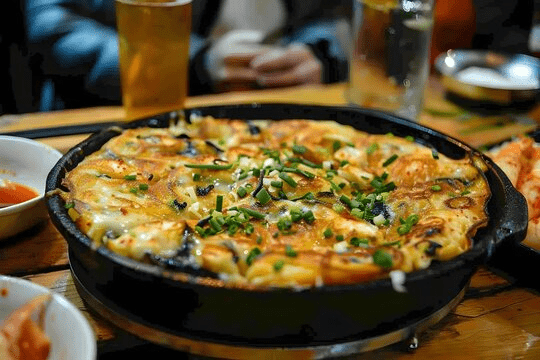
Hello everyone! Welcome to Kfood Journal. Today, we’re exploring ‘pajeon,’ Korea’s beloved traditional pancake that seems to call out to us even more on rainy days. Let’s fall under the spell of its crispy exterior, chewy interior, and the aromatic charm of green onions!
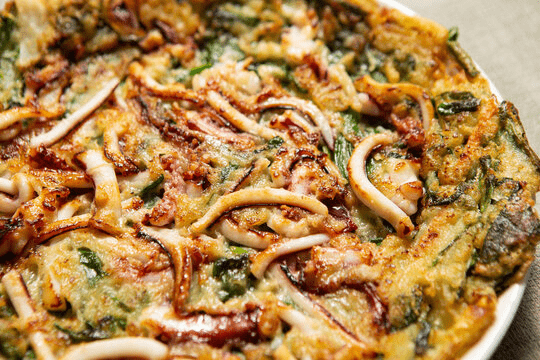
The History of Pajeon: A Dish Imbued with Rainy Day Sentiments
Pajeon combines ‘pa’ (green onion) and ‘jeon’ (pan-fried dish), literally meaning a pan-fried dish featuring green onions. Appearing in Joseon-era literature, pajeon has a long history and has uniquely established itself as food that people crave on rainy days. This association is said to come from the similarity between the sound of raindrops and the sizzling of pajeon on a hot pan. There’s also traditional Korean medicine wisdom suggesting that the dry nature of green onions helps balance the body during humid weather. While jeon dishes originally served as royal ceremonial food, they eventually became beloved snacks among common people.
Ingredients (Serves 2)
Basic Ingredients
- 10 stalks of green onions (about 300g)
- 1 cup all-purpose flour
- 1 cup water
- 1 egg
- Cooking oil as needed
Seafood Additions (Optional)
- 100g fresh shrimp
- 1/2 squid
- 50g shellfish meat
Dipping Sauce
- 3 tablespoons soy sauce
- 1 tablespoon vinegar
- 1 tablespoon water
- 1/2 teaspoon sugar
- 1/2 teaspoon red pepper flakes
- 1/2 teaspoon minced garlic
- 1/2 teaspoon sesame seeds
- 1/2 teaspoon sesame oil
Step-by-Step Cooking Process
1. Preparing the Ingredients
- Trim the roots and dark green ends of the green onions, cut them into approximately 10cm lengths, and split them in half lengthwise.
- Wash the green onions under running water to remove dirt and debris, then shake off excess water.
- If using seafood, peel the shrimp, make a cut along the back to remove the vein.
- Clean the squid, remove the innards, and slice into 0.5cm thick pieces.
- Wash the shellfish meat and drain well.
2. Making the Batter
- Place the flour in a bowl and gradually add water while mixing until there are no lumps.
- Beat the egg and mix it into the batter.
- Add 1/2 teaspoon of salt to season.
- The batter should be neither too thin nor too thick – it should slowly drip off a spoon when lifted.
3. Cooking the Pajeon
- Heat a pan over medium heat and add plenty of oil (about 3mm deep).
- When the pan is sufficiently hot, arrange the green onions in parallel.
- If using seafood, distribute it evenly over the green onions.
- Pour the batter evenly over the green onions and seafood, ensuring all ingredients are covered.
- Cook over medium heat for 3-4 minutes until the bottom becomes golden brown, then flip.
- Cook for another 3-4 minutes until both sides are crispy and golden.
- Turn off the heat and transfer the pajeon to paper towels to remove excess oil.
- Cut into appropriate sizes and serve with the dipping sauce.
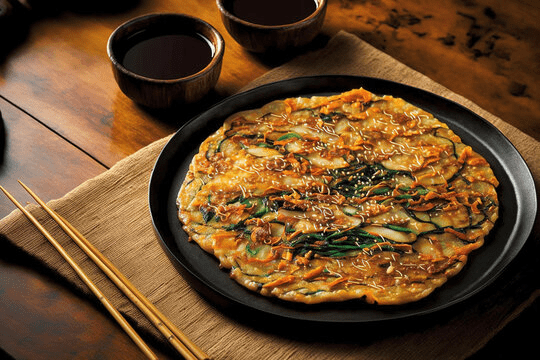
5 Key Points for Crispy Pajeon
- Keep the Batter Cold: Use ice water instead of regular water, or refrigerate the batter for 10 minutes to achieve a crispier texture.
- Align Green Onions in One Direction: Arranging the green onions in the same direction makes the pancake more visually appealing and easier to cook evenly.
- Use Sufficient Oil: Being too stingy with oil will cause the pancake to stick and lose crispiness. Frying in 3-4mm of oil makes it both crispy and flavorful.
- Cook Slowly Over Medium Heat: Cooking over too high heat will burn the outside while leaving the inside undercooked. The secret is cooking over medium heat with patience.
- Add Frying Mix or Starch: Mixing tempura flour or potato starch with the flour (about 20%) will give you an even crispier texture.
Creative Variations: Pajeon Transformations
- Kimchi Pajeon: Add finely chopped kimchi for a spicy flavor.
- Sweet Potato Pajeon: Add thinly sliced sweet potatoes for a touch of sweetness.
- Mushroom Pajeon: Add shiitake, oyster, or other mushrooms to enhance the umami flavor.
- Buchu (Chive) Pajeon: Use chives instead of green onions for a different flavor and aroma.
- Cheese Pajeon: Add mozzarella cheese for a rich, stretchy texture.
Serving Tips
- Pajeon is best when served hot. The crispiness diminishes as it cools, so serve immediately.
- Provide the dipping sauce in small dishes so everyone can adjust to their taste.
- Pajeon pairs perfectly with makgeolli (rice wine) or dongdongju. This combination is a quintessential Korean comfort food pairing, especially on rainy days.
- When cutting for serving, use scissors for clean cuts that don’t damage the green onions.
- Instead of mixing red pepper flakes into the dipping sauce, you can sprinkle them on top to adjust the spiciness and add color.
The Sizzle and the Rain: A Taste of Memories
The sound of rain outside the window, accompanied by the sizzling of pajeon in the kitchen – this harmony of sounds brings special comfort to Koreans. The pajeon from the snack shop on the way home from school, mom’s seafood pajeon prepared for family gatherings, sharing pajeon and makgeolli with friends on rainy days… Pajeon carries our simple everyday moments and memories. Tonight, if it’s raining outside, or even if it isn’t, why not experience the humble yet deep pleasure of flavor with a fragrant plate of pajeon?
#KoreanFood #Pajeon #SeafoodPancake #Snack #RainyDayFood #TraditionalFood #Recipe #MakgeolliPairing #KfoodJournal
This article was written as part of Kfood Journal’s ‘Korean Seasonal Snacks’ series.