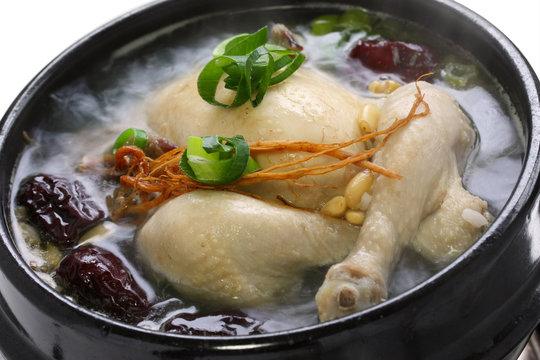
Hello everyone! Welcome to Kfood Journal. Today, we’re exploring ‘samgyetang,’ the quintessential Korean summer health food. Let’s dive into the charm of this hot chicken soup that embodies the wisdom of “fighting heat with heat” (i-yeol-chi-yeol).
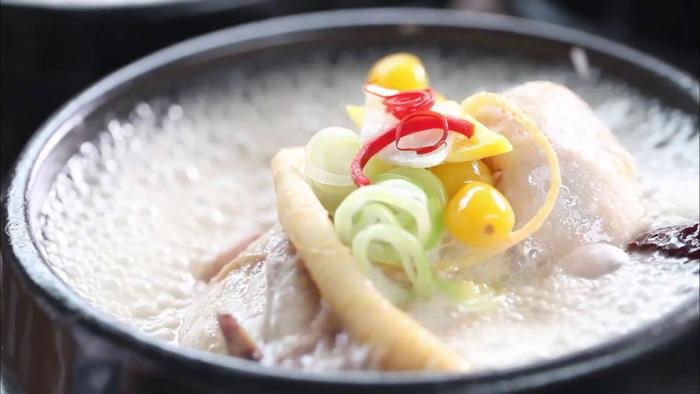
The History of Samgyetang: A Bowl Filled with the Philosophy of Medicine and Food from the Same Source
Samgyetang is a compound word combining ‘sam’ (ginseng), ‘gye’ (chicken), and ‘tang’ (soup), literally meaning chicken soup with ginseng. In traditional Korean medicine, both chicken and ginseng have long been regarded as ingredients that replenish yang energy. Eating samgyetang during the hottest days of summer (chobok, jungbok, and malbok) was a way to restore energy depleted by the heat. The medicinal properties of chicken are even recorded in the Joseon-era medical text “Dongui Bogam,” showing how our ancestors practiced the philosophy that “medicine and food share the same origin” (yak-sik-dong-won).
Ingredients (Serves 2)
Main Ingredients
- 2 young chickens (poussin/spring chicken, 500-600g each)
- 1 cup glutinous rice (soaked for at least 6 hours)
- 2 ginseng roots (about 10cm long)
- 8 jujubes (Korean dates)
- 8 garlic cloves
- 8 chestnuts (peeled)
- You can substitute fresh ginseng with white or red ginseng
- 20g milk vetch root (astragalus, optional)
- 10g Kalopanax bark (optional)
- 1 slice ginger
Seasonings
- Salt to taste
- Ground black pepper
- 1 green onion (chopped, for garnish)
- Thin red pepper threads (for garnish, optional)
Step-by-Step Cooking Process
1. Preparing the Ingredients
- Trim the tail and wing tips of the young chickens, remove the innards, and thoroughly wash under running water.
- Remove as much fat as possible from inside the chicken and trim off excess skin fat with scissors.
- Soak the glutinous rice for at least 6 hours (preferably overnight).
- Clean the ginseng roots, trimming only the very ends.
- Wash the jujubes, garlic, and chestnuts.
- If using medicinal herbs like astragalus or Kalopanax, soak them in cold water for about 30 minutes, then drain and rinse.
2. Stuffing the Chicken
- Drain the soaked glutinous rice and mix it with 2 garlic cloves, 2 jujubes, 2 chestnuts, and 1 ginseng root.
- Stuff each chicken with an appropriate amount of the rice mixture. Only fill about 70-80% to allow the rice to expand and cook properly.
- Cross the chicken legs and tuck them into the cavity, or tie them with cooking twine to prevent the rice from falling out.
3. Cooking the Samgyetang
- Place the chickens in a large pot with enough water to fully submerge them, along with the remaining ginseng, jujubes, chestnuts, garlic, medicinal herbs, and ginger.
- Bring to a boil over high heat, then reduce to medium-low heat after skimming off any foam. Simmer for 1 to 1.5 hours.
- When the chicken is fully cooked and tender enough that the meat easily falls off the bone, season with salt to taste.
4. Finishing & Serving
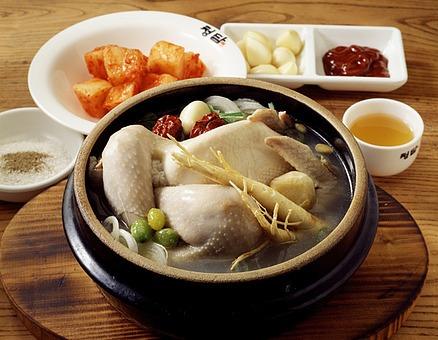
- Serve each chicken in a hot stone bowl or earthenware pot with plenty of broth.
- Sprinkle with chopped green onions and red pepper threads.
- Prepare a small dish of salt and pepper mixture on the side for dipping.
5 Key Points for Perfect Samgyetang
- Use Fresh Young Chicken: Young chickens (poussin) have tender meat and produce a cleaner-tasting broth.
- Control the Heat Properly: Start with high heat to bring to a boil, then reduce to medium-low after removing foam to fully extract the nutrients.
- Soak the Rice Thoroughly: Glutinous rice must be soaked for at least 6 hours to cook properly inside the chicken.
- Utilize Medicinal Herbs: Besides ginseng, herbs like astragalus, Kalopanax, and hovenia add both medicinal benefits and flavor.
- Season at the End: Add salt only after the chicken is fully cooked to prevent the meat from becoming tough.
Creative Variations: Samgyetang Transformations
- Abalone Samgyetang: Add fresh abalone to enhance the flavor with seafood richness and additional nutrients.
- Mushroom Samgyetang: Add various mushrooms like shiitake and oyster mushrooms for extra flavor and texture.
- Deodeok Samgyetang: Add deodeok (bonnet bellflower root) for its distinctive mountain aroma.
- Mung Bean Samgyetang: Mix soaked mung beans with the glutinous rice for better digestion and detoxification properties.
- Black Garlic Samgyetang: Use black garlic instead of regular garlic for deeper flavor and antioxidant benefits.
Serving Tips
- Be cautious as samgyetang is very hot. Let it cool slightly before serving to children.
- Provide salt and pepper on the side so everyone can adjust the seasoning to their preference.
- Serve with kkakdugi (cubed radish kimchi) or yeolmu kimchi (young radish kimchi) to complement the mild flavor of the soup.
- Some restaurants serve roasted garlic or seaweed before the meal.
- Finish the meal with traditional sweet drinks like sujeonggwa (cinnamon punch) or sikhye (sweet rice drink).
Summer Strength in a Bowl
There’s something truly special about how a bowl of samgyetang revitalizes a heat-exhausted body. The moment you take a spoonful of the hot broth, beads of sweat form on your forehead, and you can feel your energy returning! This experience makes you understand why Koreans seek out this hot soup on the hottest summer days. A bowl of this nourishing food, prepared with motherly care, means much more than just a meal. Even if it’s not officially one of the hottest days of summer, why not care for your and your family’s health with a homemade bowl of samgyetang when you need an energy boost?
#KoreanFood #Samgyetang #HealthFood #SummerFood #GinsengChicken #TraditionalCuisine #NourishingFood #KfoodJournal
This article was written as part of Kfood Journal’s ‘Korean Seasonal Health Foods’ series.