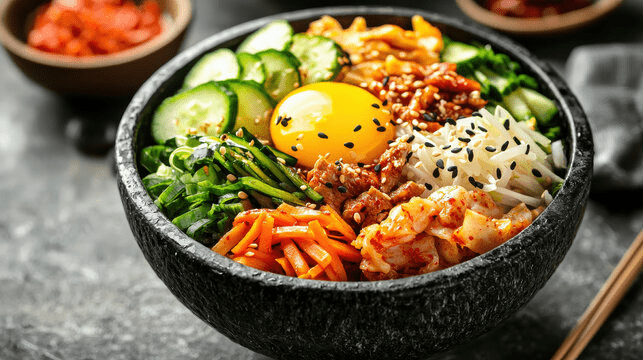
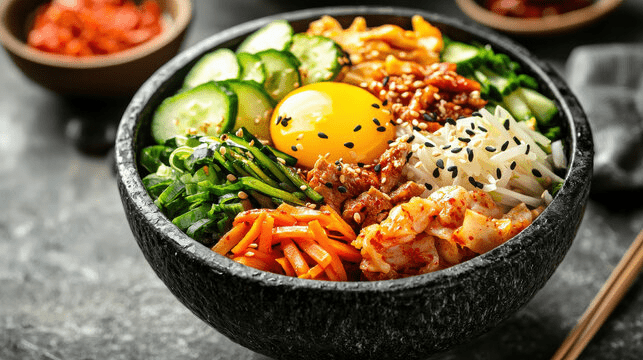
Dolsot bibimbap combines rice, seasoned vegetables, egg, and gochujang in a heated stone bowl. The useful decisions are draining the toppings well, warming the bowl gradually, and watching the rice at the edge rather than relying on one fixed cooking time.
What the Stone Bowl Changes
Unlike regular bibimbap, this version continues to cook after the rice enters the heated bowl. Residual heat keeps the dish hot and can crisp the rice where it touches the oiled surface. The result depends on the bowl, stove, rice temperature, and moisture in the toppings.
The exact origin of the modern stone-bowl presentation is not settled. What matters in the kitchen is the method: a well-heated bowl keeps the meal hot and creates the crisp rice layer called nurungji.
Ingredients (Serves 2)
Base Ingredients
- Cooked rice: 2 cups (about 400g)
- Stone bowls: 2 individual-sized
- Eggs: 2
- Sesame oil: 2 tablespoons
- Gochujang (Korean chili paste): 2 tablespoons
- Cooking oil: 1 tablespoon (for the stone bowl base)
Vegetable Toppings
- Spinach, blanched and seasoned: 1/2 cup
- Doraji (bellflower root), seasoned: 1/2 cup
- Gosari (fernbrake), seasoned: 1/2 cup
- Julienned radish or bean sprouts: 1/2 cup
- Julienned carrots: 1/4 cup
- Toasted seaweed flakes: 2 tablespoons
- Bulgogi beef (optional): 3.5 oz (100g)
Preparation Process
1. Preparing the Vegetables
- Blanch spinach, squeeze out excess water, and season with sesame oil, minced garlic, and salt.
- Season pre-soaked doraji and gosari with sesame oil and salt.
- Julienne radish, salt lightly, squeeze out water, and season with a bit of vinegar-gochujang mix or soy sauce.
- Lightly sauté julienned carrots.
- If using beef, marinate and sauté with bulgogi seasoning.
2. Heating the Stone Bowl
- Preheat stone bowls over medium heat for 5-7 minutes until thoroughly hot.
- Once hot, brush the interior surface with cooking oil.
- Pro tip: Use sesame oil instead of regular oil for extra flavor in your nurungji (crispy rice).
3. Assembling the Dolsot Bibimbap
- Place rice in the hot stone bowl, spreading it to create a flat surface.
- Arrange the prepared vegetables in a colorful circular pattern on top of the rice.
- Place an egg yolk in the center.
- Serve gochujang and sesame oil on the side for diners to add themselves.
How to Properly Enjoy Dolsot Bibimbap
1. Temperature Mastery
- At restaurants, the bowl arrives extremely hot; exact temperatures vary by bowl and stove.
- At home, warm the bowl gradually according to its manufacturer’s direct-heat instructions.
- Before mixing, listen for a steady sizzle and check whether rice at the edge has begun to turn crisp. The time varies by bowl and heat source.
2. The Art of Mixing
- First, drizzle the gochujang (chili paste) and sesame oil evenly over the rice
- Break the egg yolk and mix it in (the proteins create a silky coating that binds flavors)
- Work from the edges inward, gradually incorporating all ingredients
- Scrape up the nurungji last and mix it in for textural contrast
3. Nurungji Transformation
- Tea-soaked: Pour some barley tea or green tea over the remaining crispy bits
- Broth-infused: Some restaurants provide a small pot of light broth specifically for this purpose
Five Checks for a Crisp Rice Layer
- Gradual preheating: Follow the bowl maker’s heat instructions and avoid sudden temperature changes.
- Moisture control: Remove excess water from vegetables to prevent soggy rice.
- Visual arrangement: Arrange ingredients in a colorful pattern for visual appeal.
- Timing the mix: Wait for nurungji to form before mixing.
- Oil coverage: Brush a thin, even film over the cooking surface so the rice can crisp without becoming greasy.
Topping Options and Their Tradeoffs
Raw or Cooked Beef
- Raw beef requires an appropriate source and careful handling; cooked bulgogi is the simpler home option.
- Using broth to cook the rice adds flavor but also adds moisture, which can reduce crisping.
- Bean sprouts should be cooked and drained before they go into the bowl.
Meat and Vegetable Choices
- Use cooked bulgogi, cooked chicken, or omit meat.
- Choose a few vegetables with contrasting texture and drain each one well.
- Add sesame oil sparingly at first; more can be mixed in at the table.
Grain and Greens
- Use only correctly identified, food-safe greens and cook them as required.
- Mixed grains can be used, but their moisture and texture change the crust.
- For a firmer crust, use warm rice with a dry surface and wait for browning before mixing.
Serving & Pairing Tips
- Dolsot bibimbap can be served as a one-bowl meal.
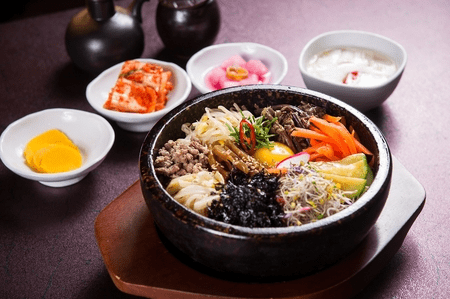
- Serve with kimchi, cubed radish kimchi, or cucumber soup for a more satisfying meal.
- Barley tea or rice wine (dongdongju) pairs beautifully with the nutty flavors.
- Remember that stone bowls stay extremely hot for a long time – transfer to a plate for children or elderly diners, or allow to cool sufficiently before serving.
Stone Bowl Science: Why It Matters
A heavy bowl stores heat and transfers it to the rice after assembly. Materials and direct-heat ratings vary, so identify the cookware and follow its instructions rather than assuming every stone bowl works on every stove.
- Heat retention champion: Stone holds heat like nobody’s business, keeping your food steaming hot until the last bite.
- Even heat distribution: No cold spots here – everything cooks uniformly.
- Steady residual heat: The heavy bowl continues cooking the rice after it leaves the burner.
- Nurungji formation: Rice touching the hot, lightly oiled surface loses moisture and browns into a crisp layer.
What This Version Has and Has Not Verified
This inherited recipe preserves its ingredient list and basic method. KFOOD Journal has not received an owner cooking log confirming the exact preheating time, yield, or result for a particular stone bowl, so use visual and audible cues and follow the cookware instructions.
For the first attempt, prepare the toppings before heating the bowl and keep the heat moderate. That leaves enough time to assemble the dish without scorching the rice.
Dolsot Bibimbap Troubleshooting
- No crisp rice layer: Preheat the bowl gradually, use warm rice, and leave the assembled rice undisturbed for 2 to 3 minutes before mixing.
- Rice burns before the toppings are warm: Lower the heat. A stone bowl stores heat, so medium or medium-low heat is usually enough once it is hot.
- The bottom turns soggy: Drain and squeeze blanched vegetables well before adding them.
- The egg stays too raw: Use a fully fried egg, or cover the bowl briefly so the residual heat cooks it further.
No Stone Bowl? Use Cast Iron
A small cast-iron skillet will not produce exactly the same table-side experience, but it can make a good crisp rice crust. Brush the hot skillet lightly with oil, press in warm rice, add the toppings, and cook over medium-low heat until the edges audibly sizzle. Protect the table with a heatproof trivet.
Stone Bowl Safety
Check the manufacturer’s instructions before using a bowl on direct heat. Warm stone cookware gradually, keep it away from cold water while hot, and use dry oven mitts. The bowl remains hot long after serving. USDA guidance recommends cooking eggs until the yolk is firm; use pasteurized eggs or egg products when serving eggs raw or undercooked.
Sources and Verification Limit
Egg handling follows the USDA shell egg guidance, and reheating guidance follows the USDA leftovers guidance. This inherited recipe is not labeled kitchen-tested because no owner cooking log was supplied for this review.
New to Korean cooking? Start with our five-dish Korean cooking plan, or compare this recipe with classic bibimbap and bulgogi.