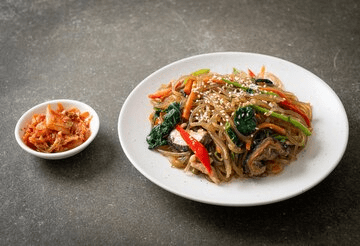
Japchae (잡채) is one of Korea’s most beloved and elegant dishes, served at special occasions and holidays throughout the year. The name “japchae” translates to “mixed vegetables,” though the star of this dish is actually the translucent sweet potato starch noodles (dangmyeon) that give it its distinctive chewy texture and subtle sweetness. This colorful stir-fry combines these springy noodles with a rainbow of vegetables, tender meat, and a savory-sweet sauce that brings everything together harmoniously.
The Essence of Japchae
What makes japchae so special is its perfect balance of textures and flavors. The slightly chewy noodles contrast beautifully with the crisp-tender vegetables, while the savory soy-based sauce with hints of sweetness ties everything together. Often described as both elegant and comforting, japchae manages to be simultaneously festive and everyday, sophisticated and accessible.
Ingredients for Authentic Japchae
The Noodles
- 8 oz (230g) Korean sweet potato starch noodles (dangmyeon)
- 6 cups water for boiling noodles
Protein Options
- 8 oz (230g) beef ribeye or sirloin, thinly sliced
- OR shiitake mushrooms for vegetarian/vegan versions
Beef Marinade
- 2 tablespoons soy sauce
- 1 tablespoon sesame oil
- 1 tablespoon brown sugar
- 1 teaspoon minced garlic
Vegetables
- 2 carrots, julienned
- 1 large onion, thinly sliced
- 2 bell peppers (preferably red and yellow for color), julienned
- 4-5 shiitake mushrooms, stems removed and sliced
- 1/2 large cucumber, seeds removed and julienned (optional)
- 8 oz (230g) fresh spinach
- 3 green onions, cut into 2-inch pieces
Japchae Sauce
- 4 tablespoons soy sauce
- 3 tablespoons brown sugar
- 2 tablespoons sesame oil
- 1 tablespoon minced garlic
- 1 teaspoon black pepper
Finishing Touches
- 2 tablespoons toasted sesame seeds
- 1 tablespoon sesame oil for final drizzle
- 2 eggs, separated and lightly beaten (optional)
Preparing Your Japchae
Step 1: Cook the Noodles
- Bring a large pot of water to a boil
- Add the dangmyeon noodles and cook for 6-8 minutes until al dente (they should be chewy but not tough)
- Drain immediately and rinse under cold water to stop the cooking process
- Drain well and cut into shorter, more manageable lengths with scissors
- Toss with 1 tablespoon of sesame oil to prevent sticking
- Set aside
Step 2: Prepare the Vegetables
Each vegetable in japchae is typically prepared separately to maintain its distinct color, flavor, and texture:
Spinach:
- Blanch in boiling water for 30 seconds
- Shock in ice water and squeeze out excess moisture
- Season with a pinch of salt and a drizzle of sesame oil
- Set aside
Carrots and Bell Peppers:
- Sauté separately in a pan with a little oil until crisp-tender (about 1-2 minutes)
- Season each with a pinch of salt
- Remove and set aside
Onions:
- Sauté until translucent but not browned
- Season lightly with salt
- Set aside
Shiitake Mushrooms:
- Sauté in a pan with a little oil until most moisture evaporates
- Season with a dash of soy sauce
- Set aside
Green Onions:
- Quickly sauté for just 30 seconds
- Set aside
Eggs (Optional):
- Beat egg yolks and whites separately
- Cook into thin crepe-like sheets in a lightly oiled pan
- Cool and cut into thin strips
- Set aside for garnish
Step 3: Cook the Protein
For beef japchae:
- Marinate thinly sliced beef for at least 30 minutes
- Cook in a hot pan for 2-3 minutes until just done
- Set aside
For vegetarian japchae:
- Use extra shiitake mushrooms and cook as directed above
- Consider adding thinly sliced firm tofu, pan-fried until golden
Step 4: Make the Japchae Sauce
Mix all sauce ingredients in a small bowl until sugar is dissolved and everything is well-combined.
Step 5: Bringing It All Together
- In a large pan or wok, add the cooked noodles
- Pour the sauce over the noodles and stir-fry for 2-3 minutes until the sauce is absorbed
- Add all the cooked vegetables and meat
- Gently toss everything together over medium heat for 2-3 minutes
- Taste and adjust seasoning if needed
Step 6: Final Touches
- Transfer to a large serving platter
- Sprinkle with toasted sesame seeds
- Garnish with egg strips if using
- Drizzle with a final touch of sesame oil
The Tradition of Japchae
Japchae has a noble history in Korean cuisine. It was originally created in the 17th century for a royal banquet during the Joseon Dynasty. The story goes that King Gwanghaegun’s royal court held a banquet where a new dish called japchae was presented. This original version didn’t even include noodles! It was primarily a stir-fried vegetable dish. The sweet potato starch noodles were added later, transforming japchae into the beloved dish we know today.
Today, japchae is a must-have dish at Korean celebrations, from weddings to harvest festivals (Chuseok) and Lunar New Year (Seollal). Its colorful appearance symbolizes good fortune and harmony, making it perfect for festive occasions.
Cultural Significance
In Korean culture, japchae represents harmony and balance. The diverse ingredients coming together in one dish symbolize the bringing together of different elements in perfect balance. The various colors of the vegetables also align with the Korean traditional color theory of obangsaek (five cardinal colors), representing the five elements.
Japchae is often served as banchan (side dish) in everyday meals but takes center stage at special occasions. It can be enjoyed warm, at room temperature, or even cold, making it perfect for gatherings and potlucks.
Modern Variations
While traditional japchae follows the recipe above, many modern variations exist:
- Seafood Japchae: Using shrimp or squid instead of beef
- Spicy Japchae: Adding gochugaru (Korean red pepper flakes) to the sauce
- Royal Japchae: An elaborate version with more luxury ingredients like jujubes and ginkgo nuts
- Fusion Japchae: Incorporating non-Korean ingredients like asparagus, broccoli, or even cheese
Health Benefits
Japchae offers several nutritional advantages:
- Sweet potato starch noodles are gluten-free and lower in calories than many other types of noodles
- The diverse vegetables provide a range of vitamins and antioxidants
- The dish offers a good balance of carbohydrates, proteins, and vegetables
- Sesame oil contains healthy fats and antioxidants
Whether you’re preparing a festive meal or looking for a satisfying dinner option, japchae delivers both visual appeal and complex flavors. The time invested in preparing each component separately pays off in a dish with distinct textures and vibrant colors that’s sure to impress.
Have you tried making japchae at home? What are your favorite ingredients to include in this versatile dish? Share your experience in the comments below!