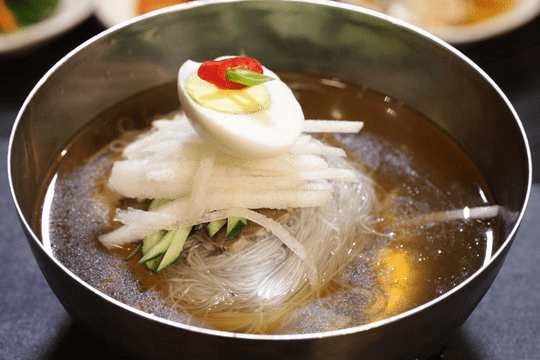
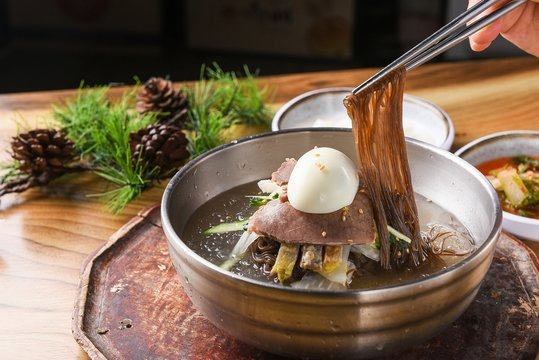
Hello everyone! This is Kfood Journal. Today, we’re introducing Naengmyeon, Korea’s iconic summer delicacy that instantly banishes the sweltering heat with its refreshing flavors.
The History of Naengmyeon: From Royal Courts to the People
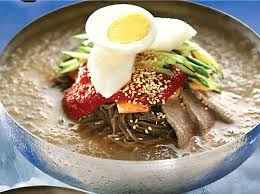
Naengmyeon has been enjoyed since the Goryeo Dynasty, originally served in royal courts during winter. According to “Dongguk Sesigi” (Survey of Korean Seasonal Customs), during the Joseon Dynasty, people enjoyed frozen buckwheat noodles in cold broth. Over time, it evolved into a quintessential summer dish to combat the heat. After the 1950s, North Korean refugees from Pyongyang and Hamhung regions widely spread this dish throughout South Korea. Today, Naengmyeon has developed into two main styles—Mul-naengmyeon (cold broth noodles) and Bibim-naengmyeon (spicy mixed noodles)—beloved by both Koreans and international visitors.
Ingredients (Serves 2)
Cold Broth (for Mul-naengmyeon)
- 500g beef brisket or bone-in beef
- 300g pork shoulder
- 1 onion
- 1 green onion root
- 5 cloves garlic
- 1 piece ginger
- 1/4 radish
- 1/2 Asian pear
- 1/2 apple
- 3 tablespoons vinegar
- 2 tablespoons sugar
- Salt to taste
- 10 cups water
Spicy Sauce (for Bibim-naengmyeon)
- 3 tablespoons gochujang (Korean red pepper paste)
- 2 tablespoons gochugaru (Korean red pepper flakes)
- 2 tablespoons vinegar
- 2 tablespoons sugar
- 1 tablespoon minced garlic
- 1 tablespoon sesame oil
- 1 tablespoon soy sauce
- 2 tablespoons Asian pear juice
- 1 tablespoon maesil-cheong (Korean plum extract, optional)
Basic Ingredients
- 400g naengmyeon noodles (store-bought or buckwheat noodles)
- 1 cucumber, julienned
- 1/2 Asian pear, julienned
- 100g cooked beef brisket, thinly sliced
- 2 hard-boiled eggs
- Vinegar and mustard to taste
Preparation Method
- Making the Broth (for Mul-naengmyeon)
- Soak beef and pork in cold water for about 1 hour to remove blood.
- In a large pot, add meat and water and bring to a boil, then discard the first water.
- Add fresh water along with onion, green onion, garlic, ginger, and radish, then simmer on low heat for 3-4 hours.
- When the broth is done, remove the solid ingredients and cool it before skimming off the fat.
- Add blended pear and apple to the cooled broth, then season with vinegar, sugar, and salt.
- Refrigerate until thoroughly chilled.
- Making the Spicy Sauce (for Bibim-naengmyeon)
- Mix all sauce ingredients thoroughly until well combined.
- Let the sauce rest for about 30 minutes to allow flavors to meld.
- Preparing the Garnishes
- Julienne cucumber, lightly salt it, then squeeze out excess moisture.
- Julienne the Asian pear.
- Thinly slice the cooked beef.
- Cut hard-boiled eggs in half.
- Assembling the NaengmyeonFor Mul-naengmyeon:
- Cook naengmyeon noodles in boiling water for 3-4 minutes, then rinse in cold water to remove excess starch.
- Place noodles in a cold bowl and pour the chilled broth over them.
- Arrange the garnishes (cucumber, pear, beef, egg) attractively on top.
- Serve with vinegar and mustard on the side.
- Cook and rinse noodles as above.
- Place noodles in a bowl and top with the prepared spicy sauce.
- Arrange garnishes on top and drizzle with a touch of sesame oil.
- Mix thoroughly just before eating.
5 Golden Secrets for Perfect Naengmyeon
- Thoroughly Chill the Broth: The essence of Mul-naengmyeon is its refreshing coldness. Refrigerate the broth for at least 4 hours before serving.
- Respect Noodle Cooking Time: Overcooking makes noodles mushy, undercooking makes them tough. Follow package instructions for perfect texture.
- Balance the Acidity: The vinegar-to-sugar ratio significantly influences the taste. Start with small amounts and gradually adjust to your preference.
- Utilize Fruits for Natural Sweetness: Pear and apple add natural sweetness and aroma to the broth—a key secret ingredient.
- Rinse the Noodles: Always rinse cooked noodles in cold water to maintain their elasticity and remove excess starch.
Naengmyeon Variations
- Hoe-naengmyeon: Topped with fresh raw fish for an oceanic flavor profile
- Hamheung-naengmyeon: A spicier version originating from Hamheung region
- Yeolmu-naengmyeon: Served with young radish kimchi for added freshness
- Buckwheat vs. Starch Noodles: Choose between traditional buckwheat noodles for texture or smoother starch noodles based on preference
- Dongchimi-naengmyeon: An extra-refreshing version using white radish water kimchi broth
Serving Suggestions
Naengmyeon is traditionally served in deep stainless steel or ceramic bowls. For Mul-naengmyeon, provide vinegar and mustard on the side so diners can adjust according to taste. For Bibim-naengmyeon, offer extra spicy sauce for those who prefer more heat. Accompaniments like dongchimi (radish water kimchi) or cucumber pickles enhance the meal. In summer, pair with chilled dongdongju (rice wine) or cold beer for the perfect combination to beat the heat.
Summer’s Refreshment, A Bowl of Naengmyeon Comfort
A bowl of Naengmyeon is more than just a meal—it’s a refreshing respite for your body and mind during the sweltering summer heat, embodying a thousand years of Korean wisdom and creativity. The harmony of chilled broth, chewy noodles, and crisp vegetables offers a momentary escape from the complexities of daily life, immersing you in pure culinary pleasure. Why not share a bowl of Naengmyeon with loved ones on a hot summer day and experience this moment of serenity together?
#KoreanFood #Naengmyeon #MulNaengmyeon #BibimNaengmyeon #SummerFood #RefreshingCuisine #BuckwheatNoodles #KfoodJournal
This article is part of the Seasonal Korean Cuisine series by Kfood Journal.