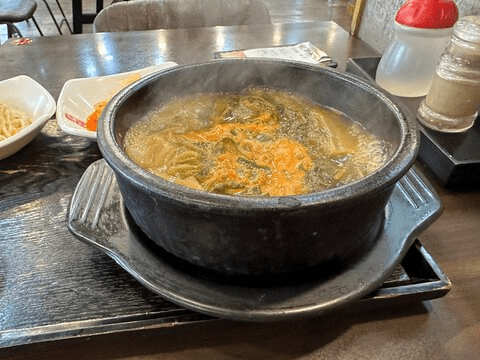
Yukgaejang is a spicy Korean beef soup made with shredded beef, green onion, vegetables, garlic, and red pepper. The useful decisions for a home cook are choosing a cut that shreds well, preparing the dried vegetables, and adding the red pepper without scorching it.
What Defines Yukgaejang
The Korean Food Promotion Institute describes yukgaejang as beef brisket and radish cooked until tender, then seasoned with green onion, taro stems, gosari, and gochugaru. Historical recipes use different beef cuts and seasonings, so this page presents one practical home version rather than a single definitive formula.
Ingredients (Serves 4)
Main Ingredients
- 500g beef brisket or shank
- 100g Korean radish (mu)
- 50g dried fernbrake (gosari), soaked
- 100g bean sprouts
- 2 green onions
- 100g taro stems (torandae) or alternatively daikon stems, sweet potato stems
- 1 egg (for garnish)
- 10 cups water
Seasoning
- 4 tablespoons Korean red chili powder (gochugaru)
- 2 tablespoons chili oil (or mix red chili powder with sesame oil)
- 3 tablespoons soy sauce
- 2 tablespoons minced garlic
- 1 tablespoon sesame oil
- Salt to taste
- Black pepper to taste
- 1 tablespoon perilla seed powder (optional)
Preparation Method
- Preparing the Beef
- Soak the beef in cold water for about 30 minutes to remove blood.
- In a large pot, bring 10 cups of water and beef to a boil.
- Remove any foam that rises to the surface.
- Reduce to medium-low heat and simmer for 1.5-2 hours until the meat becomes tender.
- Remove the beef, let it cool, and shred it along the grain.
- Preparing the Vegetables
- Soak the fernbrake until soft, then cut into appropriate lengths.
- Wash the bean sprouts thoroughly.
- Slice the radish into thin strips.
- Cut the green onions diagonally.
- Blanch the taro stems in boiling water to remove bitterness, then cut into manageable lengths.
- Beat the egg and make a thin pancake (jidan), then cut into strips for garnish.
- Seasoning
- Season the shredded beef with 1 tablespoon each of red chili powder, soy sauce, minced garlic, and sesame oil.
- Lightly season the fernbrake and taro stems with red chili powder, soy sauce, and minced garlic.
- Completing the Yukgaejang
- In a pot, heat the chili oil and sauté the seasoned beef. Add the remaining red chili powder and stir-fry.
- Pour in the beef stock and bring to a boil, then add the radish.
- After simmering for 5 minutes, add the seasoned fernbrake and taro stems and continue to boil.
- Adjust seasoning with soy sauce, salt, and pepper.
- Finally, add the bean sprouts and green onions and bring to a final boil.
- Serve in bowls and garnish with the egg strips.
- Sprinkle with perilla seed powder if desired.
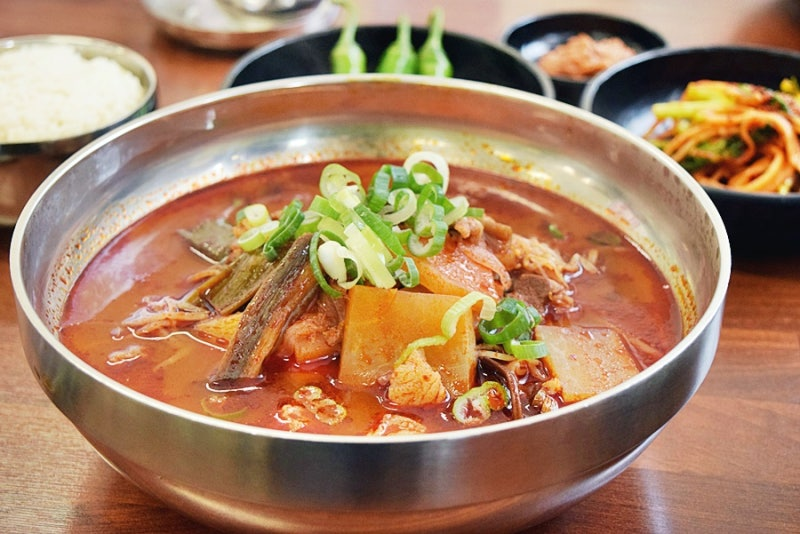
Five Technique Checks Before You Start
- Check the Beef Before Shredding: Continue simmering until the beef separates with light pressure. A fixed time is less useful than the texture of the cut in your pot.
- Use Chili Oil: A mixture of sesame oil and red chili powder, briefly heated, creates the distinctive spicy flavor that defines Yukgaejang.
- Shred Beef Along the Grain: Pull the tender beef into long strands so it remains distinct among the vegetables.
- Add Bean Sprouts Last: Add bean sprouts toward the end of cooking to maintain their crisp texture.
- Treat Perilla Seed Powder as Optional: Add a small amount for a nuttier, fuller broth, or leave it out when you want a cleaner beef flavor.
Yukgaejang Variations
- Traditional Offal Version: Using traditional beef innards (tripe, lung, intestine) for a deeper, more complex flavor
- Chicken Yukgaejang: Substituting beef with chicken for a lighter, more delicate version
- Seafood Yukgaejang: Incorporating seafood alongside beef for enhanced flavor
- Mushroom Yukgaejang: Adding various mushrooms for deeper aroma and enhanced texture
- Spicy vs. Mild Versions: Adjusting the chili powder quantity to control heat intensity
Serving Suggestions
Serve yukgaejang with plain rice and a crisp side dish such as kkakdugi. Put extra gochugaru or sliced chili on the table instead of increasing the heat for the whole pot. For leftovers, divide the soup into shallow covered containers and refrigerate promptly.
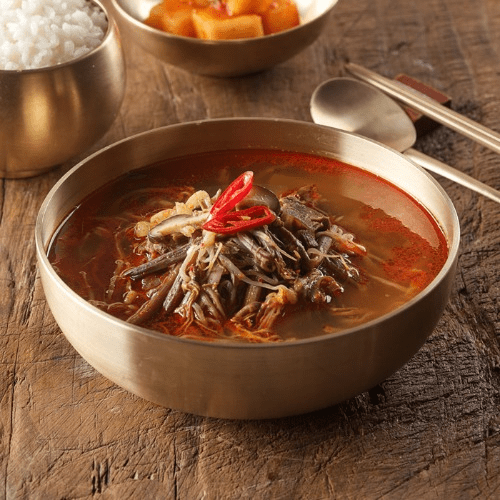
Serving and Storage
The USDA advises refrigerating cooked leftovers promptly in shallow containers, using most leftovers within 3 to 4 days, and reheating them to 165°F (74°C). Reheat only the portion you plan to serve so the vegetables are not repeatedly softened.
Sources and Verification Limit
The dish definition and historical comparison were checked against the Korean Food Promotion Institute dish guide and its historical cookbook feature. Storage guidance follows the USDA leftovers guidance. This inherited recipe has not been labeled kitchen-tested because no owner cooking log was supplied for this review.
Ingredient Substitutions That Keep the Soup Balanced
- No gosari: Use sliced shiitake or oyster mushrooms for a chewy, savory element. The result is not traditional, but it keeps the soup satisfying.
- No taro stems: Leave them out and add more green onion or mushrooms instead.
- No brisket: Beef shank or chuck works when simmered until it shreds easily.
- Less heat: Reduce the gochugaru, but keep the garlic, soy sauce, and green onion so the broth still has depth.
How to Keep Gochugaru from Turning Bitter
Gochugaru can scorch quickly in hot oil. Warm the oil over low heat, remove the pot from direct heat if necessary, and stir in the pepper flakes only until fragrant. Add broth before the flakes darken. If the soup tastes harsh, dilute it with unsalted broth and correct the seasoning at the end.
Yukgaejang Troubleshooting
- Cloudy or greasy broth: Keep the beef at a gentle simmer and skim foam and excess fat as it cooks.
- Tough beef: Continue simmering before shredding; the meat should separate with light pressure.
- Flat flavor: Adjust soup soy sauce and salt separately. Soy sauce adds aroma and color, while salt raises seasoning without darkening the broth.
- Soft bean sprouts: Add them near the end and avoid prolonged reheating.
Build confidence with the Korean cooking starter plan, then try seolleongtang for a mild beef soup or sundubu jjigae for another spicy broth.