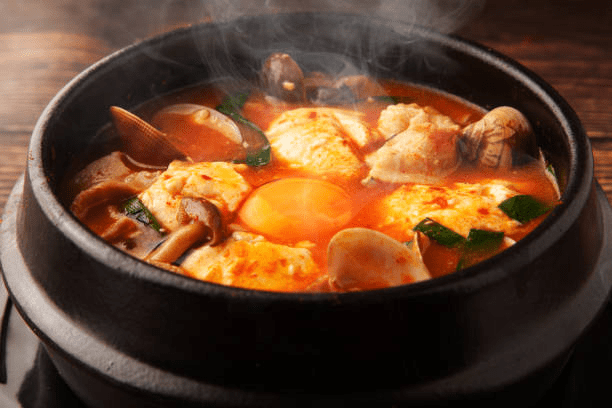
Sundubu jjigae is a Korean soft-tofu stew built around a seasoned broth, gochugaru, and tender tofu. This version includes shellfish and optional beef; the key decisions are keeping the chili flakes from scorching, adding the tofu late, and seasoning only after the seafood has flavored the broth.
What Defines This Sundubu Jjigae
The recipe uses soft tofu for its delicate texture and builds the broth with garlic, soup soy sauce, gochugaru, shellfish, and optional beef. Because the shellfish and fish sauce both add salt, taste the broth near the end before adding extra salt.
Ingredients (Serves 2)
Main Ingredients
- 1 block (about 400g) of soft tofu
- 100g ground beef (optional)
- 100g shellfish (clams, small mussels)
- 50g shrimp (optional)
- 1 egg
- 50g enoki mushrooms
- 1 green chili pepper
- 1/2 green onion
- 1 tablespoon vegetable oil
- 2 cups water or kelp stock
Seasoning
- 2 tablespoons Korean red chili flakes (gochugaru)
- 1 tablespoon soup soy sauce (gukganjang)
- 1 tablespoon minced garlic
- Salt to taste
- 1 teaspoon sesame oil
- Toasted sesame seeds for garnish
- 1 teaspoon fish sauce (optional)
Preparation Method
- Preparation Steps
- Soak the shellfish in salted water to remove sand.
- Chop the green onion finely and slice the green chili pepper diagonally.
- Trim the base of the enoki mushrooms and separate them.
- Cut the soft tofu into large chunks.
- Cooking the Stew
- Heat vegetable oil in a pot, then stir-fry the ground beef until browned. Add garlic and sauté until fragrant.
- Add the red chili flakes and stir quickly to prevent burning, then pour in the water or kelp stock.
- Add the soup soy sauce and fish sauce, adjusting the seasoning to taste.
- Add the cleaned shellfish and shrimp, bringing the broth to a boil.
- When the shells begin to open, carefully add the soft tofu in large pieces, followed by the enoki mushrooms.
- Add the green chili pepper and green onion, then bring to a final boil.
- Crack an egg on top, drizzle with sesame oil, and sprinkle with sesame seeds to finish.
- Serving
- Keep the stew at a simmer until the egg white and yolk are firm, then serve carefully because the pot remains hot.
- Enjoy with a bowl of rice.
Five Checks While Cooking
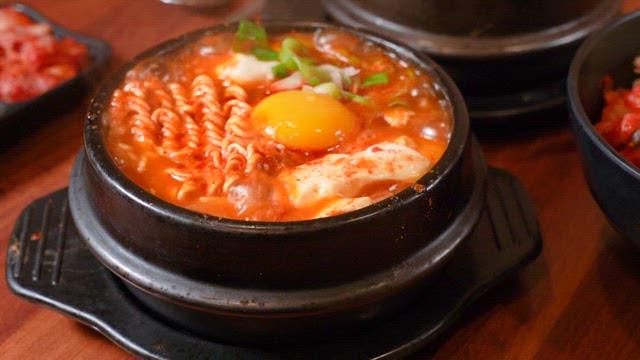
- Choose soft tofu: Use a package labeled soft or extra-soft tofu and handle it in large pieces so it does not disappear into the broth.
- Clean the shellfish: Rinse and purge shellfish as appropriate for the product so sand does not enter the broth.
- Use a suitable pot: A Korean earthenware ttukbaegi retains heat, but a small saucepan also works. Follow the cookware maker’s direct-heat instructions.
- Watch the gochugaru: Stir it briefly over moderate heat and add the liquid promptly if it darkens quickly; scorched chili makes the broth bitter.
- Handle the egg safely: Add it near the end and cook until the white and yolk are firm, or use a pasteurized egg if serving it undercooked.
Sundubu-jjigae Variations
- Seafood Sundubu-jjigae: Enhanced with various seafood (squid, mussels, oysters) for a richer oceanic flavor
- Kimchi Sundubu-jjigae: Incorporates well-fermented kimchi for added depth and complexity
- Mushroom Sundubu-jjigae: Features diverse mushrooms for enhanced texture and nutritional value
- Doenjang Sundubu-jjigae: Uses Korean soybean paste instead of chili for a milder, earthier flavor
- Canned Sundubu: Utilizes convenient pre-packaged Sundubu stew base available at Korean grocery stores
Serving Suggestions
Serve the stew with rice and optional banchan such as kimchi or pickled vegetables. Adjust the heat with the amount of gochugaru and fresh chili, but reduce one at a time so the seasoning remains easy to judge.
What This Version Has and Has Not Verified
This inherited recipe preserves its ingredient list and basic cooking order. KFOOD Journal has not received an owner cooking log confirming the exact yield, heat level, or result, so the page is not labeled kitchen-tested. Use the visible cues in the method and adjust seasoning to the ingredients in your pot.
For a first attempt, prepare every ingredient before heating the oil. This makes it easier to add liquid before the gochugaru scorches.
This article is part of the Korean Stews Series by Kfood Journal.
Troubleshooting
- The broth tastes bitter: The gochugaru may have scorched. Use moderate heat and add the stock immediately after a brief stir.
- The tofu breaks apart: Add it in large pieces after the broth is seasoned, then stir around rather than through the tofu.
- The broth is too salty: Use either fish sauce or extra salt first, then taste after the shellfish opens before adding more.
- The stew seems thin: Let the broth simmer before adding the tofu instead of extending the final boil, which can break the tofu.
Food Safety and Storage
USDA guidance recommends cooking eggs until both the white and yolk are firm; use pasteurized eggs or egg products if serving eggs raw or undercooked. Refrigerate leftovers within two hours, use them within three to four days, and reheat them to 165°F (74°C).
Sources and Verification Limit
Egg handling follows the USDA shell egg guidance, and storage follows the USDA leftovers guidance. This inherited recipe is not described as kitchen-tested because no owner cooking log was supplied for this review.
New to Korean cooking? Start with the Korean cooking starter plan, then compare this method with kimchi jjigae or doenjang jjigae.