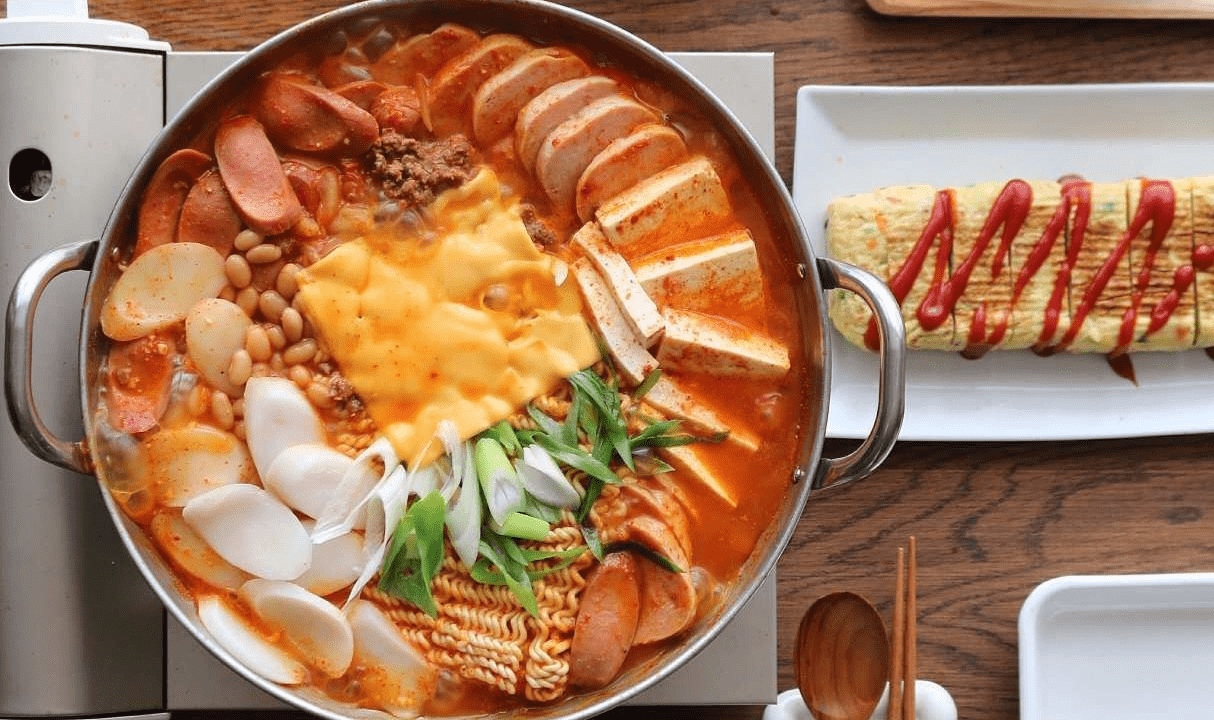
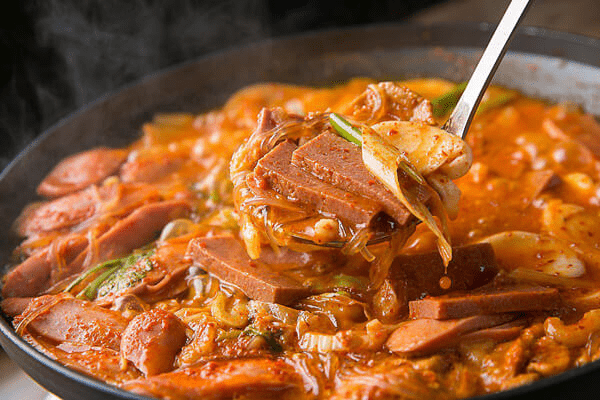
Hello everyone! This is Kfood Journal. Today, we’re introducing Budae-jjigae (Army Stew), a unique dish that embodies both the pain of modern Korean history and its creative spirit. This special recipe, born from the fusion of American army base ingredients and traditional Korean stew culture, has become a beloved representative of Korean cuisine worldwide.
The History of Budae-jjigae: Creative Flavors Born from Adversity
Budae-jjigae originated in the 1950s around Uijeongbu, Gyeonggi Province after the Korean War. During the post-war period when food was scarce, Koreans creatively incorporated surplus ingredients from U.S. military bases—sausages, ham, and bacon—into traditional kimchi stew recipes. The name “Budae-jjigae” literally means “Army Base Stew,” reflecting its origins. What began as a survival food has evolved into a beloved dish representing Korean culinary ingenuity and resilience, now enjoyed in restaurants throughout Korea and around the world.
Ingredients (Serves 4)
Main Ingredients
- 200g kimchi (preferably aged)
- 150g sliced spam
- 150g hot dogs or sausages
- 100g sliced bacon
- 100g ground beef (optional)
- 150g tofu (firm), cubed
- 100g rice cakes (sliced)
- 1 package instant ramen noodles
- 50g sliced American cheese
- 1 small onion, sliced
- 2 green onions, chopped
- 1 can (400g) baked beans (optional)
- 100g enoki mushrooms (optional)
- 100g sliced Korean zucchini (hobak)
Broth Base
- 4 cups water or anchovy stock
- 3 tablespoons gochugaru (Korean red pepper flakes)
- 2 tablespoons gochujang (Korean red pepper paste)
- 1 tablespoon doenjang (Korean soybean paste, optional)
- 2 tablespoons soy sauce
- 2 tablespoons minced garlic
- 1 tablespoon sugar
- 1 tablespoon Korean soup soy sauce (guk-ganjang)
- 2 teaspoons sesame oil
- Black pepper to taste
Preparation Method
- Prepare the Broth Base
- In a bowl, combine gochugaru, gochujang, doenjang, soy sauce, minced garlic, sugar, soup soy sauce, sesame oil, and black pepper to create a paste.
- Mix thoroughly until all ingredients are well incorporated.
- Layer the Ingredients
- Place a shallow, wide pot or a traditional Korean ttukbaegi (earthenware pot) on the stove.
- Put kimchi in the center of the pot.
- Arrange the remaining ingredients around the kimchi in an organized, visually appealing pattern: spam, sausages, bacon, tofu, rice cakes, vegetables, and mushrooms.
- Leave space for the ramen noodles to be added later.
- Cook the Stew
- Pour water or anchovy stock over the ingredients.
- Add the prepared broth base on top of the ingredients.
- Cover the pot and bring to a boil over medium-high heat.
- Once boiling, reduce to medium heat and simmer for about 5-7 minutes until the meat is cooked and kimchi becomes tender.
- Add the ramen noodles and cook for another 2-3 minutes until the noodles soften.
- Place the sliced cheese on top and allow it to melt slightly.
- Sprinkle chopped green onions before serving.
- Serve the Budae-jjigae
- Serve directly from the pot while still bubbling hot.
- Each person can use tongs or chopsticks to take ingredients from the communal pot.
5 Golden Tips for Perfect Budae-jjigae
- Use Aged Kimchi: Aged kimchi (at least 2 weeks old) provides deeper flavor and the necessary acidity to balance the richness of the processed meats.
- Layer Properly: Create a beautiful arrangement by placing ingredients in sections rather than mixing them, allowing each component to cook properly and creating a visually appealing presentation.
- Adjust Spice Level Gradually: Start with a moderate amount of gochugaru and gochujang, as you can always add more later to suit your taste.
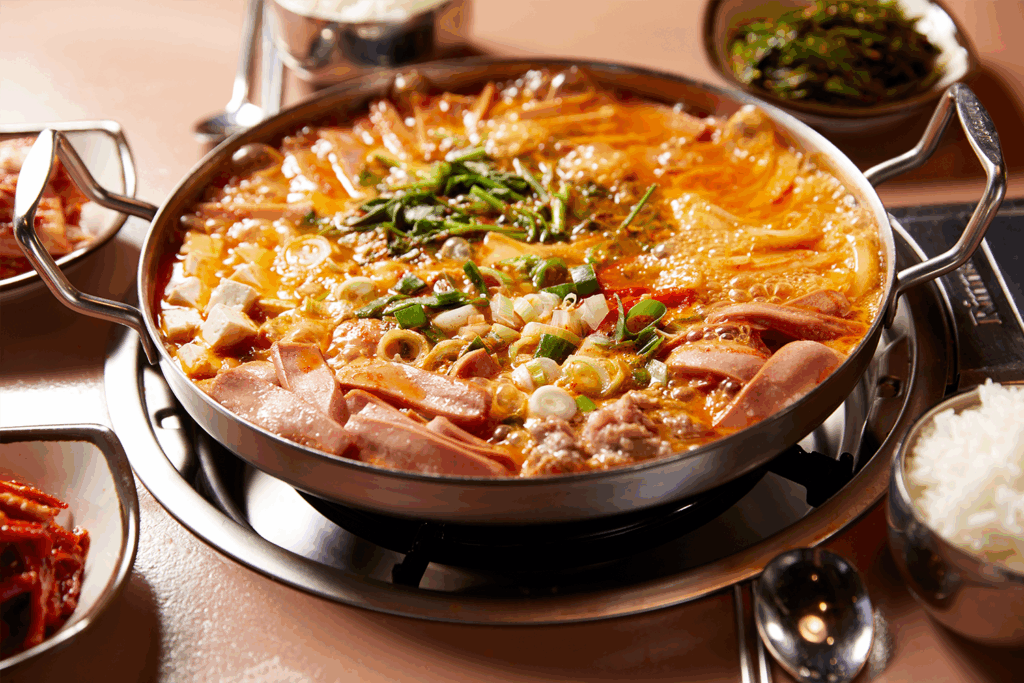
- Keep it Simmering: Budae-jjigae tastes best when kept simmering at the table, traditionally on a portable burner, maintaining the perfect temperature throughout the meal.
- Don’t Overcook the Noodles: Add the ramen noodles only in the final few minutes of cooking to prevent them from becoming too soft.
Creative Variations
- Cheese Budae-jjigae: Add extra cheese for an even creamier texture and milder flavor profile.
- Seafood Army Stew: Incorporate shrimp, squid, or mussels for a seafood twist.
- Vegetarian Version: Replace meat products with more mushrooms, plant-based protein, and additional vegetables.
- Extra Spicy: Double the gochugaru and add fresh chili peppers for heat lovers.
- Army Stew Ramyeon: A simpler version focusing on ramyeon with fewer ingredients but maintaining the key flavors.
Serving Suggestions
Budae-jjigae is traditionally served directly from the cooking pot placed in the center of the table, creating a communal dining experience. It’s typically enjoyed with a side of fresh steamed rice, kimchi, and other banchan (Korean side dishes). For beverages, Korean soju or cold beer makes an excellent pairing, cutting through the rich, spicy flavors of the stew. The dish is perfect for gathering friends and family, especially on cold days when its heat and spice provide welcome warmth.
A Pot of History, A Bowl of Comfort
Budae-jjigae is more than just a delicious meal—it’s a testament to Korean resilience and creativity. From its humble origins as a necessity-driven creation during hard times to its current status as a celebrated dish, it symbolizes how adversity can be transformed into something extraordinary. Each spoonful tells a story of cultural fusion, historical significance, and the universal language of comfort food. Next time you gather around a bubbling pot of Budae-jjigae, remember you’re not just sharing a meal, but a piece of living history.
#KoreanFood #BudaeJjigae #ArmyStew #FusionCuisine #KoreanRecipe #ComfortFood #KfoodJournal
This article is part of the Historical Korean Cuisine series by Kfood Journal.